
35 Enjoyable Activities for Seniors with Limited Mobility

Activities for seniors with limited mobility can include seated games, creative hobbies, music, accessible gardening, social visits and gentle movement adapted to the person’s abilities. Older adults who cannot stand safely can still take part in many of these activities from a wheelchair, supportive chair or bed. The best activity is one the person actually wants to do, with the right setup and as much independence as possible.
This guide includes 35 ideas, with practical adaptations for weak grip, fatigue, restricted movement and difficulty sitting upright. You will also find a simple way to choose an activity, a seven-day plan and a checklist for making a room more accessible. Exercise ideas are optional and must fit the individual’s care and rehabilitation plan. Every idea below has a no-standing option; several do not require using the hands at all.
Choose activities for seniors with limited mobility by ability
Rather than starting with a diagnosis or an age, consider what the person can comfortably do today. Someone who walks short distances with a walker may need a different setup from a wheelchair user who can independently reach and handle objects. Someone recovering from surgery may have restrictions that do not apply to either person.
| Current ability or situation | Good starting activities | Adaptation |
|---|---|---|
| Can sit comfortably and use both hands | Cards, painting, sorting photographs | Stable table at a comfortable height |
| Uses a wheelchair or cannot stand safely | Tabletop bowling, accessible gardening, book club | Clear approach, suitable knee clearance and usual seating support |
| One hand is weak or painful | Audio stories, card holder, voice messages | Non-slip mat, larger objects and a helper for setup |
| Needs substantial support or spends time in bed | Music, shared reading, choosing photographs | Use their usual supported position; no reaching or transfers required |
| Tires quickly | One song, one postcard, one short conversation | Offer a short session and an easy stopping point |
These categories are not medical assessments. Some people have difficulty with trunk control, vision, swallowing or attention as well as movement. Ask about their preferences, check their care plan and choose an easier option if today’s abilities differ from yesterday’s.
7 seated games and mental activities
These activities can be enjoyed without standing. A clear work surface and comfortable seating are more important than completing the game or following every rule.
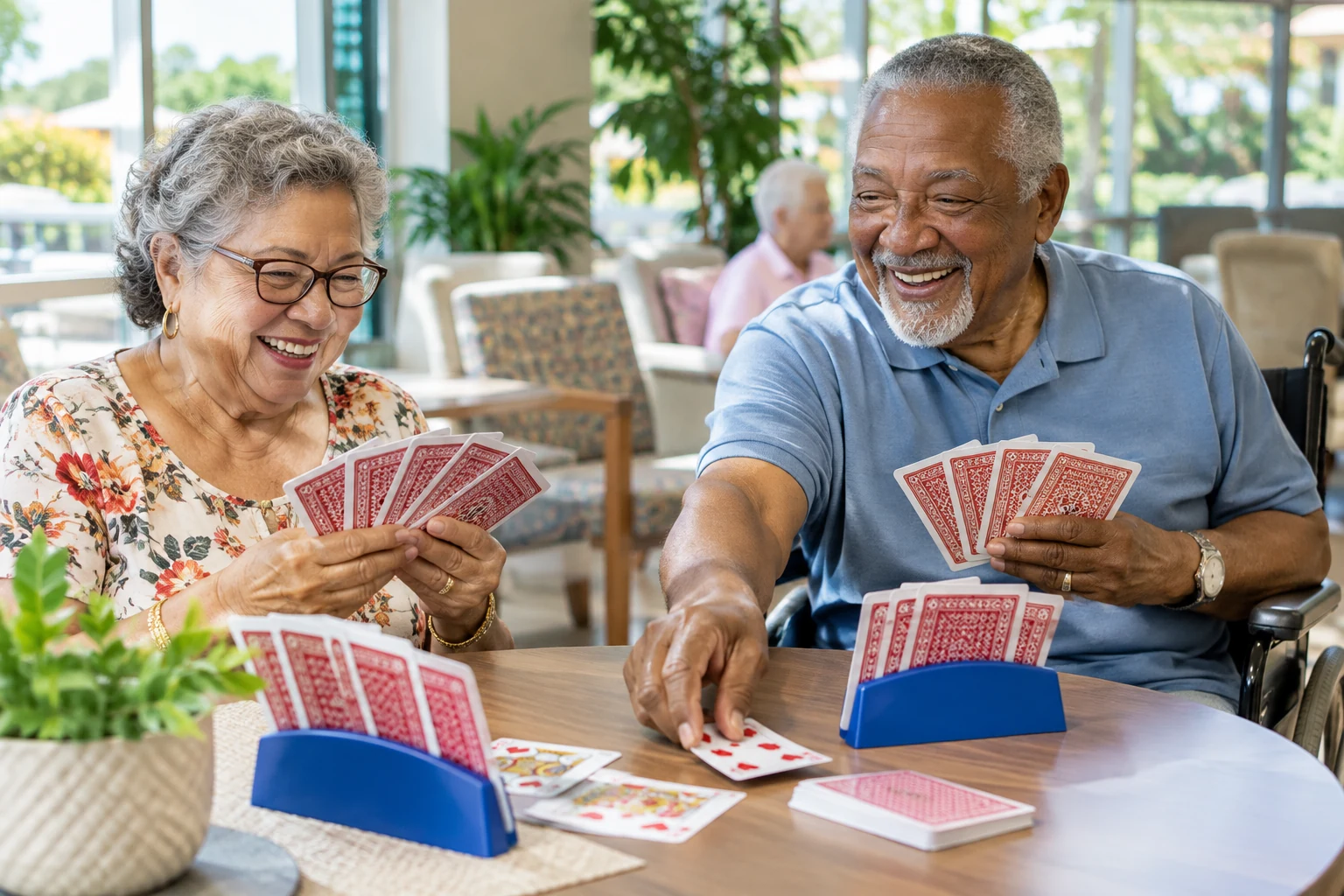
1. Large-print playing cards
Choose a familiar game such as rummy, solitaire or a simple matching game. A card holder and non-slip mat make it easier to play with one hand. If shuffling is difficult, a companion can deal while the older adult makes their own decisions.
2. Tabletop bowling
Set up a few lightweight, wide-based pins on a table and roll a soft ball toward them. Keep the target close enough that nobody has to lean forward or twist. A helper retrieves the ball. Avoid small loose pieces if there is a swallowing risk.
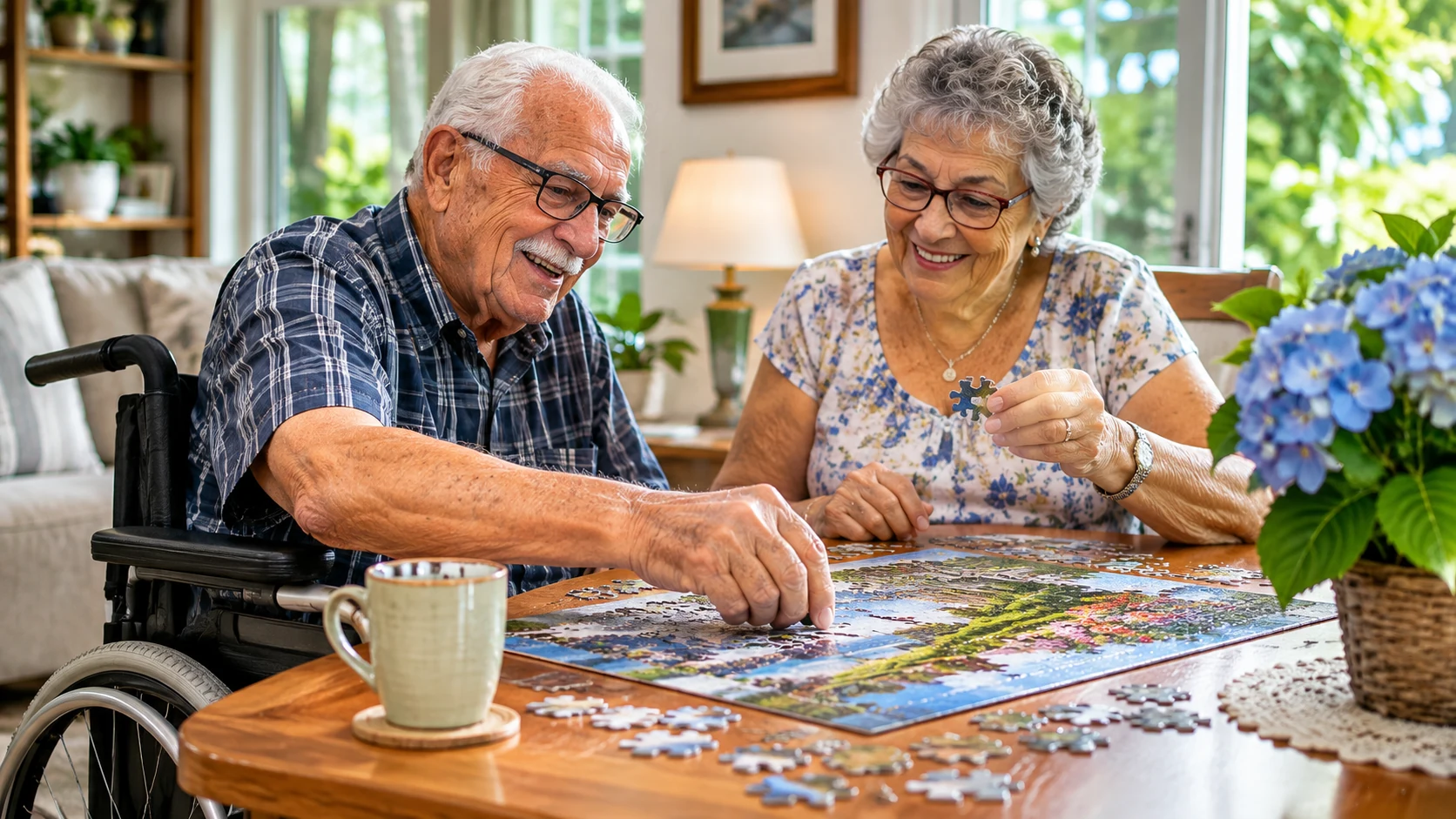
3. Cooperative jigsaw puzzles
Choose an adult-interest picture, such as a favorite landscape or a classic car, with larger pieces. Work together on one corner at a time. Use a shallow tray with a contrasting background, and leave the puzzle set up between sessions if possible.
4. Dominoes or magnetic board games
A board with pieces that stay in place is helpful when grip or coordination is limited. Choose easy-to-handle pieces and avoid small magnets or detachable parts when unsafe. Keep the board close rather than expecting the person to reach across the table.
5. Conversation trivia without scoring
Choose topics the person likes: music, sports, geography, cooking or local history. Offer choices instead of demanding recall, and talk about the answers together. This is a pastime, not a cognitive test or treatment for memory loss.
6. Newspaper and opinion hour
Read a short news story or feature aloud and ask what the person thinks. Let them select the subject, disagree or skip the story. For low vision or hand fatigue, use a tablet with text-to-speech or a radio news program.
7. Accessible bingo
Use large-print cards, large reusable markers and clear spoken calls. Offer a partner to mark the card when hand movement is limited. Avoid tiny markers when there is a risk of swallowing them. A short game can be just as enjoyable as a full session.
6 creative hobbies for older adults who cannot stand
The goal is personal expression, not a perfect finished product. Choose projects that can be left unfinished and resumed another day.
8. Watercolor with an easy-grip brush
Secure paper on a table, offer a few colors and use a thicker brush handle if needed. A companion can rinse the brush or move supplies closer. If the person cannot hold a brush, they can choose the colors and direct the painting.

9. Postcard collage
Use large pre-cut images of places, animals, gardens or objects the person enjoys. Arrange them on stiff paper and use safe adhesive. A helper can do the cutting and gluing if movement is painful. Keep materials away from anyone likely to put them in their mouth.
10. Voice-recorded family stories
Invite the person to tell a short story about a job, a tradition or a memorable holiday. Use a phone recorder with their permission. The activity works even when writing is difficult; the person decides whether the recording is shared or kept private.
11. Chunky yarn or textile projects
A person who already enjoys knitting or crochet may prefer a familiar, manageable project. Try a large loom or easy-grip tools if suitable. A companion can manage tangles. Avoid sharp tools, cords and small components where they pose a risk.
12. Design a photo album
Spread a few photographs within reach and invite the person to select an order, suggest captions or choose a theme. A helper can do the mounting or digital editing. Do not insist on identifying people or remembering dates.
13. Direct a tabletop photography project
Arrange safe objects such as flowers, shells or family keepsakes. The older adult chooses the composition, lighting or angle; a companion operates the camera if needed. This allows creative control without requiring the person to lift equipment or move around the room.
6 gentle movement activities from a chair
These are options for people whose healthcare team considers the relevant movements appropriate, not a routine everyone should follow. For general guidance, see the NHS sitting exercises and the CDC guidance for people with chronic conditions or disabilities. Use the person’s established seating, supervision and movement restrictions. For ordinary chair exercise, the NHS recommends a solid, stable chair without wheels; wheelchair users should use their own prescribed positioning and equipment, with advice about safe exercise setup.
14. Seated ankle movements
If allowed, gently lift and lower the front of the foot or the heel while comfortably supported. Keep movements small if joints are stiff, and stop if symptoms develop. Recent fractures, surgery, new swelling or other restrictions require advice before trying unfamiliar movements.
15. Seated marching
For someone with adequate sitting balance and permission to move their hips and knees, alternate lifting the feet a little. There is no need to lift high or keep a particular pace. If lifting the leg is restricted, choose another activity approved by the care team.
16. Comfortable shoulder or arm movements
Move the arms within a permitted, pain-free range, such as a gentle reach toward an object already nearby. Do not pull an affected arm, force a stretch or assume both sides can do the same movement. Stroke survivors and people with shoulder problems may need specific guidance.

17. Seated dancing to one song
Choose a favorite song and invite comfortable hand, foot or shoulder movements. Listening or singing is equally valid if moving is tiring. Avoid unsupported twisting, leaning, fast repetitive movements or trying to stand to the music when unsafe.
18. Seated rhythm tapping
Tap a familiar beat with a comfortable hand or foot movement, if allowed. Use a tabletop or the person’s own lap, avoiding painful repetitive motion. A companion can keep the rhythm while the older adult hums or simply listens. No special equipment is necessary.
19. Adapted exercise class
Look for an instructor experienced with older adults and disability, and ask whether every movement can be done seated. Tell the instructor about relevant restrictions and have a clinician or therapist review unfamiliar exercise when needed. Resistance bands, weights and pedals are not suitable for everyone; use them only if appropriate for the individual.
The CDC older-adult guidelines describe aerobic, strength and balance activity goals for those able to meet them. People with limitations should be active within their abilities and medical restrictions. A short recreational activity is worthwhile even when it does not count as moderate exercise. For readers who can safely progress with a suitable program, see our senior fitness guide.
5 activities for seniors who are bedbound or have very low energy
Being unable to sit at a table does not mean someone must spend the whole day watching television. Use the person’s usual supported position, respect prescribed positioning and pressure-relief schedules, and offer activities that require little or no physical effort. Do not reposition or transfer someone without the appropriate plan, equipment and training.
20. Shared audiobook or read-aloud
Select a short chapter, poem or article the person enjoys. Use a speaker at a comfortable volume and pause when they want to talk or rest. If reading aloud is not welcome, listen quietly together.

21. Personal radio hour
Choose a music station, familiar broadcast, sports commentary or podcast. The older adult can decide what to hear next without handling a device. A remote or voice control may help where appropriate. Keep alerts and volume from disturbing other residents.
22. Window-view conversation
If the person already has a suitable view, talk about the weather, a tree, passing birds or the changing light. If not, use a photograph or a live nature stream. Never move a bed or wheelchair to an unsafe position solely to improve the view.
23. Choose a memory object
Bring one meaningful photograph, a familiar textile or another safe keepsake. Invite the person to look, listen or touch if they want to. Use simple descriptions and avoid testing recall. Stop if the object brings distress or the person becomes tired.
24. Short, meaningful visits
Invite one familiar visitor for a brief conversation, quiet companionship or a favorite shared song. Ask before touching, taking photos or bringing a pet. Visits should fit the person’s comfort, infection precautions and rest needs rather than a fixed schedule.
5 social and purposeful activities at home
Someone may miss their former role more than they miss a specific hobby. Ask what they enjoyed doing for other people, what they want to contribute and who they want to spend time with.
25. Teach a skill from a chair
Invite a retired tradesperson, cook, musician or gardener to explain something they know well. A family member can perform the physical parts while the older adult gives directions. Choose a safe project, not one involving live electricity, sharp tools or other hazards.
26. Family recipe planning
Choose a meal, dictate ingredients or tell the story behind a recipe. If the person wants to handle food, use an accessible preparation area and follow any dietary, swallowing or food-safety restrictions. Let a helper handle hot appliances and knives.
27. Telephone or video coffee club
Arrange a regular call with one or two people the older adult chooses. Use a stand for the device, captions if helpful and a simple way to join. A telephone call may be easier than video for someone who dislikes screens. Do not make the person participate just because a call is scheduled.
28. Make cards for a real occasion
Choose a birthday, celebration or thank-you note. The person can select a card, dictate a message, decorate it or sign it if comfortable. The purpose is a genuine connection, not busywork. Get permission before sending anything in their name.
29. Plan a community or family event
Invite the person to choose music, suggest a menu, help make a guest list or decide on a theme. If they do not want to attend in person, they can still be involved in planning or join remotely. Avoid assuming that participation requires travel or a long visit.
6 accessible nature and outdoor activities
Getting outdoors can be enjoyable, but a person does not need to walk in order to enjoy nature. Check the route, weather, shade, toilets, transportation and access to usual mobility aids. If an outing is too demanding, bring part of the experience indoors.
30. Table-height container gardening
Use a small, stable planter at a height the person can comfortably reach. Offer a lightweight watering container and let a helper move heavy pots. For wheelchair users, check knee and footrest clearance. Choose suitable plants, avoid sharp tools and follow infection advice if the person is immunocompromised.

31. Birdwatching without walking
Watch from an accessible porch, window or sheltered bench. Keep a simple bird guide nearby, or identify birds by sound. If binoculars are too heavy, a companion can describe what they see or show a photograph.
32. Accessible park or garden visit
Check ahead for step-free access, suitable surfaces, accessible toilets, seating and a realistic return route. Plan transport and any transfers using the established care arrangements. A ten-minute visit can be enough; the outing need not involve walking or completing a route.
33. Arrange flowers at a table
Offer a stable vase and a few safe stems already trimmed by a helper. The person can choose colors or direct the arrangement instead of lifting the vase. Avoid thorns, toxic plants and irritating fragrances where relevant.
34. Virtual museum or nature tour
Choose a place the person is genuinely interested in, such as a national park or museum. Use a large display or audio description, and let the person decide which exhibits to explore. A helper can manage controls without taking over the experience.
35. Outdoor listening session
Sit in an accessible, shaded place and listen to the surroundings, or bring the experience indoors with recorded birdsong or waves. Respect temperature tolerance, prescribed fluid limits and the person’s wish to return inside. Quiet enjoyment is enough; there is no requirement to fill the time with conversation.
How to set up a room for accessible activities
Before purchasing equipment, try adjusting the environment. An occupational therapist can help assess seating, reach, tools and task adaptations, particularly if the person has had a stroke, injury, progressive condition or change in independence.
- Ask the person where they prefer to sit and whether they want assistance. Use their usual approved seating and supports.
- Clear floor space around mobility aids. For a wheelchair, ensure the table can be approached without the footrests striking it or trapping the knees.
- Put only the necessary supplies on the table, within comfortable reach. Use a non-slip mat, good lighting and contrasting colors if helpful.
- Keep a way to summon help, glasses and hearing aids within reach where appropriate. A helper should retrieve dropped objects rather than encouraging unsafe bending.
- Plan a convenient stopping point and leave room for rest. Do not use an activity to delay toileting, medications, meals or necessary position changes.
For families arranging paid support, our guide to the duties of a home care aide explains how companionship and everyday assistance fit within an agreed care plan. Aides should not be expected to provide rehabilitation outside their training or responsibilities.
Adapting activities for dementia, weak hands and fatigue
Limited mobility does not necessarily involve cognitive impairment. If the person also has dementia, the National Institute on Aging recommends adapting activities to abilities and interests. Offer one simple step at a time, demonstrate rather than repeatedly correcting, and let participation be voluntary. Use familiar adult activities, not tasks chosen solely because they appear easy.
For weak or painful hands, make the objects larger or lighter, stabilize materials, and offer audio or verbal alternatives. For low vision, use high contrast, reduced glare and spoken instructions. For hearing difficulty, reduce background noise and face the person while speaking. For fatigue, offer two choices and start with a few minutes. If the person becomes quiet, frustrated or uncomfortable, ask whether they want a break or to stop.
A flexible seven-day activity plan
This is a sample for planning, not a prescribed schedule or exercise dose. Pick a time when the person is generally most alert and comfortable. The second column is a fallback for a day when energy or movement is limited.
| Day | Preferred activity | Lower-energy alternative |
|---|---|---|
| Monday | Card game with a friend | Listen to a favorite song |
| Tuesday | Table-height gardening | Look at garden photographs |
| Wednesday | Approved seated movement | Listen to a short audiobook |
| Thursday | Create a postcard | Dictate a message to a friend |
| Friday | Choose and discuss a news story | Listen to a radio feature |
| Saturday | Accessible garden or park visit | Watch birds from a window |
| Sunday | Family recipe planning or call | Quiet visit or no planned activity |
Keep a simple note of what the person chose, how much setup was needed, whether they enjoyed it and what they would change. Avoid recording a good day as a target that must be achieved on every future day. If an activity did not work, adjust one thing: the time, positioning, tools, duration or company.
What if an older adult refuses activities?
Start by respecting the refusal. Being offered a choice is different from being expected to participate. Try asking whether the person would prefer a different activity, a different time, quiet company or rest. Do not describe someone as unmotivated simply because their preferences differ from yours.
If withdrawal is new or persistent, consider whether pain, medication effects, poor sleep, grief, hearing difficulty or depression may be contributing. A healthcare professional can help assess concerning changes. Activity can support enjoyment and connection, but is not a substitute for treatment. The National Institute on Aging’s guidance on enjoyable activities discusses social participation and well-being; it does not establish that any particular hobby prevents disease.
Safety: when to stop and seek help
Stop physical activity if the person develops dizziness, unusual breathlessness, new pain or marked fatigue. The NIA exercise guidance also discusses symptoms that should not occur during exercise. Seek urgent medical assessment for concerning new symptoms; chest pain, severe breathing difficulty, fainting or sudden facial droop, arm weakness or speech difficulty warrant emergency help. Do not assume a sudden loss of mobility is a normal part of aging.
If movement has recently changed after a fall, hospitalization, surgery or illness, ask the treating team about restrictions before trying new exercise, transfers or positioning. For people who spend much of the day sitting or in bed, follow their individual pressure-injury prevention plan; a hobby is not a replacement for pressure relief, skin care or prescribed repositioning. Follow any swallowing and dietary advice during food-related activities. If unsure whether a task is safe, choose a nonphysical activity while seeking guidance.
Frequently asked questions
What are the best activities for seniors who cannot walk?
Cards, audiobooks, music, storytelling, accessible gardening, tabletop games and short visits are good options, depending on the person’s preferences and abilities. None requires walking. A wheelchair user may also enjoy accessible outings if transport, positioning and access needs are met.
What can an elderly person do while sitting all day?
They can participate in creative work, conversation, games, virtual tours, reading, music and suitable seated movement. Sitting for long periods may require individualized position changes or pressure relief, so follow the person’s care plan rather than using entertainment to extend time in one position.
Are chair exercises safe for all seniors with limited mobility?
No. Suitability depends on health, seating stability, balance, pain, recent injuries and medical restrictions. A physical therapist or another qualified professional can recommend movements that fit the person. Do not assume a generic seated workout is appropriate for everyone.
How can I entertain a bedbound elderly parent?
Offer a choice of a favorite program, short reading, music, a phone call or quiet companionship. Set everything up so they do not need to strain or reach. Respect their usual care and positioning routine, and stop when they want to rest.
What are inexpensive activities for seniors with limited mobility?
Use items already available: family photographs, a deck of cards, paper, a favorite radio station, books, a window view or a telephone call. Library audiobooks and community telephone groups may also be available without charge. Adapt existing hobbies before buying new equipment.
How long should an activity last?
There is no universal duration. Start with a comfortable few minutes when fatigue or pain is a concern, and continue if the person enjoys it and remains comfortable. Exercise duration should follow individual clinical advice rather than this recreational schedule.
The bottom line
The best activities for seniors with limited mobility are accessible, personally meaningful and flexible enough to change with the person’s energy and abilities. Choose one enjoyable activity and make it easy to participate without unsafe reaching, standing or transfers. Add more variety only if the person wants it.
For more ideas across a wider range of abilities, explore our 60 therapeutic activities for seniors. This guide is educational, not an individualized rehabilitation or medical plan. Read our medical disclaimer for more information.
Share This Article: